

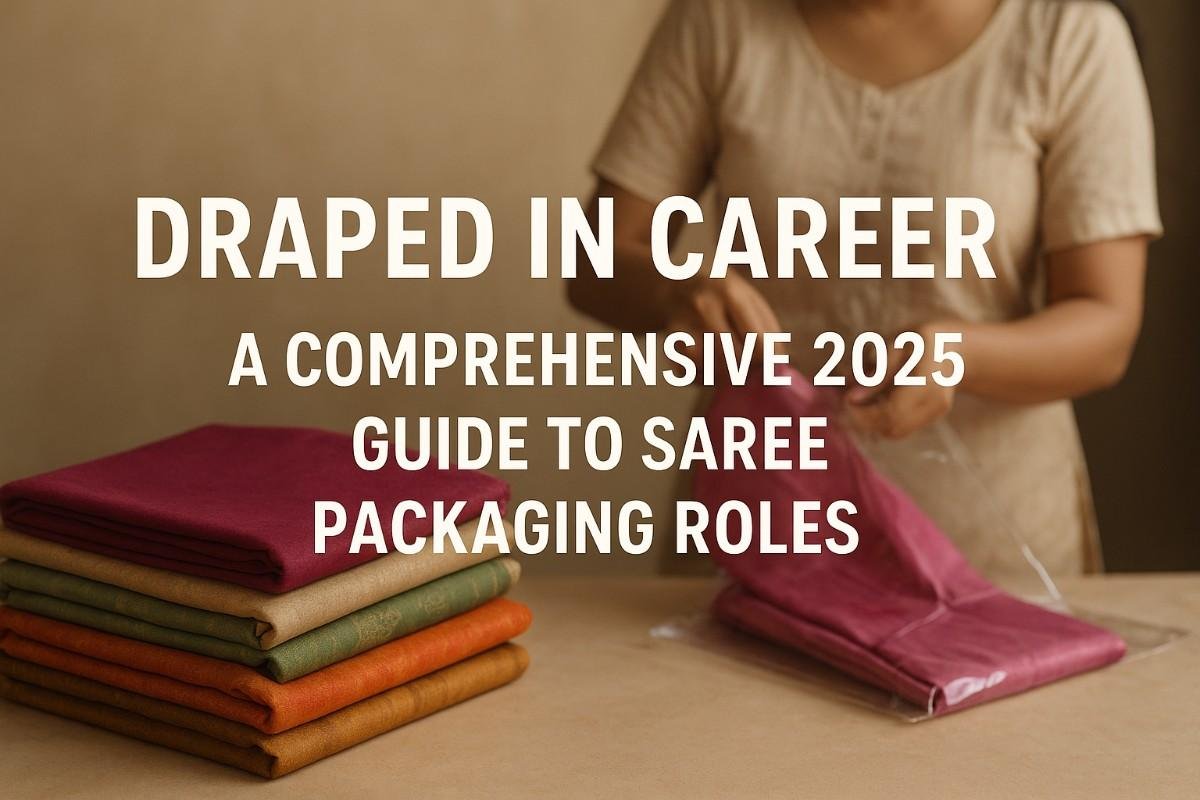
Introduction – Why a Saree Packaging Job Is a Great Choice This Year
As India embraces a resurgence in cultural fashion, sarees—ranging from traditional handloom to modern printed blends—are seeing skyrocketing demand across both retail and online channels. For those seeking accessible and meaningful work, saree packaging offers an outstanding entry point. These roles require minimal formal education; what matters most are qualities like precision, dedication, and reliability. Imagine handling beautiful fabric, folding carefully, securing packets, and preparing them for shipping—each step contributing to someone’s treasured moment. Many factories today offer steady shifts, training on simple equipment, and room to move into inspection, logistics, or even quality coordination. Whether you’re looking for your first job, a side income, or a stable workplace, saree packaging roles provide a grounded, culturally rich, and growth-oriented career option in 2025.
1. What Does Saree Packaging Work Involve?
- Careful Folding
Fold sarees with attention to fabric type—silk, cotton, georgette—and preserve edges. - Packaging & Wrapping
Use tissue paper or protective sheaths, and wrap neatly to avoid creases or damage. - Sealing & Bagging
Place sarees in transparent sleeves or branded poly bags while ensuring clean folds. - Labeling & Batch Coding
Apply SKU labels, size and fabric info, or barcodes as required for easy tracking. - Carton Loading
Stack wrapped sarees into cartons or boxes, ensuring safe transportation. - Quality Review
Spot-check for color consistency, crease patterns, or misplaced labels.
2. Who Can Start in This Role?
- Educational Level: Basic schooling—10th or 12th—is generally sufficient.
- Desired Traits:
- Steady hand with fabric texture awareness.
- Consistency in folding and packing pace.
- Respect for fabric care and cleanliness.
- Punctuality and strong attendance records.
3. Entering the Saree Packaging Field
- Keep an eye on factory or manufacturing unit walk-ins in local garment or textile areas.
- Apply directly as a packer/handler—many operations train you on-site.
- Demonstrate precision, initiative, and a learning mindset—starting small can lead to steady promotions.
4. Salary and Additional Perks
- Monthly Wages: Typically ₹12,000 to ₹18,000 depending on region.
- Bonuses: Some units offer performance bonuses for error-free targets.
- Non-Monetary Benefits: On-site meals, shift flexibility, and referral incentives in some factories.
- Career Pathways: Top performers may move into roles like quality assistant or shift coordination.
5. A Day’s Work Flow in the Packaging Line
- Shift Start: Receive batch details and fabric types, gather packaging materials.
- Operational Flow: Fold, wrap, seal, label—repeat with diligence.
- Break Moments: Reorganize materials or help with cleanup.
- End of Shift: Tidy your zone, hand over records, and communicate any material shortfalls or quality issues.
6. Advancing Within the Factory
- Packer → QC Companion → Section Lead → Logistics Coordinator
- Consistency, error-free markup, and helping train new staff can up your promotion trajectory.
7. Everyday Challenges & Clever Responses
- Handling Delicate Fabric: Use clean hands or simple barrier creams for protection.
- Monotony: Focus on rhythm and precision—small goals keep attention sharp.
- Label Mistakes: Double-check SKUs before sealing—accuracy saves rework.
- Supply Hitches: Flag packaging shortages early.
8. Tips to Excel in This Role
- Be consistently punctual—attendance matters.
- Keep your station tidy, with clean folds and labels always accessible.
- Support teammates during rushes—teamwork eases workload.
- Learn to fold different saree materials neatly—versatility earns attention.
- Offer to help with wrapping, labeling, or cleanup—initiative is noticeable.
9. Common Hiring Locations
- Saree Making Districts: Traditional textile towns often hire regularly for packing roles.
- Garment Clusters: Industrial zones focused on women’s apparel usually require packing staff.
- Job Placement Hubs: Vocational training centers often partner with factories for placements.
10. Why 2025 Makes These Roles Attractive
- Surging Saree Demand: From everyday wear to festival shopping and e-commerce, orders remain high.
- Decentralized Production: Factories spread across towns mean localized hiring opportunities.
- Skill Pathways: Precise, dependable packers often move quickly into better-paying roles.
- Cultural Significance: Your role preserves fabric beauty—real value in every packet.
Conclusion
Joining the saree packaging line brings you a culturally rich, practical, and stable career path—no degree required, but plenty of room to grow. From folding silk to coordinating shipment, your contribution shapes both product quality and customer experience. If you value cleanliness, rhythm, and accuracy, this job aligns with your strengths and opens up advancement opportunities in quality control or logistics. In 2025, the saree industry isn’t just a market—it’s an experience. And you can be both craftsman and coordinator of that experience.
