

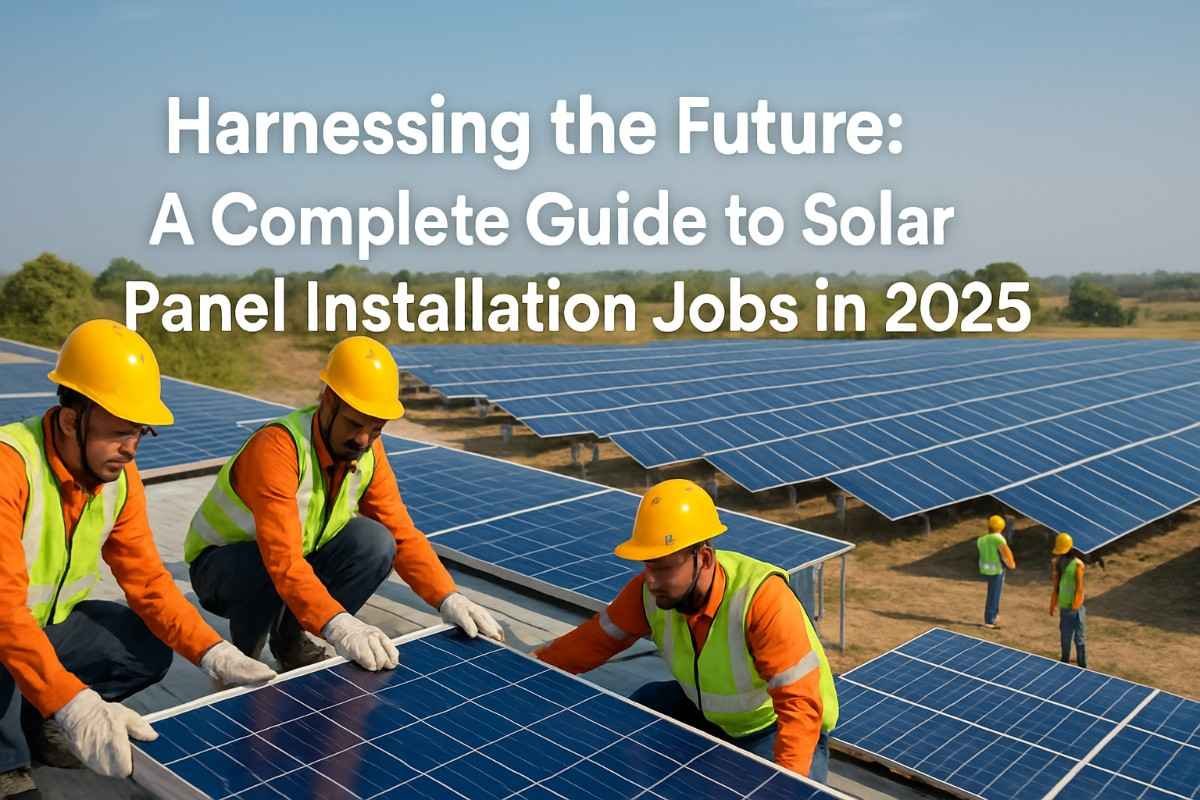
Introduction — Why 2025 Is Your Moment to Shine with Solar
By 2025, the solar energy sector has become a powerful engine of growth across India. Driven by sustainable energy goals, public demand for reliable power, and financial incentives, solar installations—from residential rooftops to utility-scale farms—are multiplying rapidly. Solar installer roles offer a front-row ticket to this energy transformation. These jobs are accessible to technicians, electricians, construction workers, and hands-on learners who want to make an impact. Even without a college degree, you can train in a few months and start building tomorrow’s clean energy solutions today. This field delivers not just paycheck stability but also skill growth across mounting structures, electrical wiring, troubleshooting modules, and safety protocols. Best of all, solar installers contribute directly to reducing carbon footprints and building greener communities—your work powers more than kilowatts; it powers hope and progress.
1. What Does a Solar Panel Installer Do?
-
Site Assessment: Evaluate roof strength, tilt angles, shade areas, and dispatch layouts.
-
Structural Mounting: Set up racking systems—frames, rails, or ballasts—to secure solar panels.
-
Panel Placement: Install panels accurately, consistently wiring them in series and parallel strings.
-
Electrical Connections: Link DC output to inverters, connect inverters to house or grid lines.
-
Testing & Commissioning: Verify system functionality, check output metrics, ensure safe earthing and clean signals.
-
Maintenance & Monitoring: Inspect for debris, loose wires, or inverter faults, and conduct routine tune-ups.
2. Who Are Ideal Candidates for This Role?
-
Vocational Background: Electricians, hardware techs, or solar diploma holders step into this easily.
-
Hands-On Experience: Familiarity with basic wiring, tools, and physical agility helps tremendously.
-
Attitude for Safety & Precision: You’re often working on rooftops—caution and care are vital.
-
Punctuality & Reliability: Projects are often scheduled tightly; being dependable matters.
3. How to Get Started with Solar Installation Work
-
Sign up for a short vocational course or apprenticeship in solar tech or electrical installation.
-
Get on-the-job under senior installers—learn build steps, wiring standards, safety protocols.
-
Register with local solar companies or freelance panels—many hire trainable apprentices.
-
Build real experience—assist with minor troubleshooting, data logging, or wiring prep.
-
Earn certification where possible (e.g., electrical or solar-standard) for long-term job leverage.
4. Compensation and Benefits Snapshot
-
Entry-Level Installers: ₹15,000–₹25,000/month.
-
Tech-Level Installers: ₹20,000–₹35,000 after a year or more of experience.
-
Senior or Lead Roles: ₹35,000–₹50,000+—especially for managing teams or large-scale arrays.
-
Perks: Daily travel allowances, tool kit access, performance bonuses, and growth potential in green sectors.
5. A Typical Day on the Job
-
Pre-Site Prep: Load panels, tools, and safety gear into service vehicle.
-
On-Site: Set up fall protection, rack infrastructure, mount panels, complete wiring loops and inverter hookups.
-
Lunch & Checks: Keep tools organized, panel cleaning, and monitor whether wire paths are safe.
-
Final Review: Turn system on, check DC and AC output, confirm grounding and proper labeling.
-
Wrap-Up: Log project details, clean site, and prepare for next workday.
6. Growing Your Career from Installer to Leader
-
Installer → Senior Installer → Site Supervisor → Project Lead → Operations or Safety Trainer
-
Exposure to different terrains—like solar farms, rooftop retail, or rural microgrids—broadens both salary potential and expertise.
7. Challenges You Might Face (And How to Overcome Them)
-
Heat Exposure or Sloped Surfaces: Use protective gear, plan mid-day breaks, and hydrate well.
-
Electrical Safety Risks: Always double-check lockouts, follow wiring color codes, and adhere to safe practices.
-
Team Coordination on Big Projects: Track progress openly, share workload evenly, and use radios/phones effectively.
-
Keeping Pace with Tech: Sign up for updates on battery storage integration, hybrid systems, or smart-grid setups.
8. How to Stand Out as a Solar Installer
-
Arrive on time with full gear—consistency earns trust.
-
Keep your work neat—organized wiring runs and clean panel surfaces make for lasting quality.
-
Offer proactive checks—like verifying panel alignment or shading issues before installation.
-
Learn inverter diagnostics, error code resolution, or obscure fuse applications—be known as the resource person.
-
Walk the talk—demonstrate green energy awareness and safety-first attitudes.
9. Where to Find Installation Jobs
-
Rooftop Markets: Urban areas, factories, schools, or wellness centers.
-
Solar Farms & Rural Setups: All across farmland regions or remote electrification zones.
-
Commercial Constructions: Integrate installations with real estate, parking structures, or startups.
-
Check local deployments in community solar schemes or government tender-based rural energy drives.
10. Why Solar Installer Roles Fit Perfectly in 2025
-
Massive Upscaling: Domestic and industrial solar projects are accelerating year-on-year.
-
Green Policy Backing: Government subsidies and net-metering practices continue to fuel production.
-
Technological Evolution: From panel efficiency to smart management systems, the industry is growing intellectually as well as physically.
-
Career Dignity: Standing power systems up—especially in rural electrification—is socially impactful and personally rewarding.
Conclusion
A solar panel installation job in 2025 is more than a paycheck—it’s an opportunity to build infrastructure that powers homes, schools, and communities sustainably. From rooftops to sprawling arrays, your role shapes energy futures, mitigates environmental impact, and fosters long-term employment opportunities. With on-site learning, upward mobility, and tangible impact, it’s a career path truly energized by purpose. If you’re ready to step into a field where skilled hands meet smart energy, your training gear is waiting—let’s light up tomorrow, one panel at a time.
