

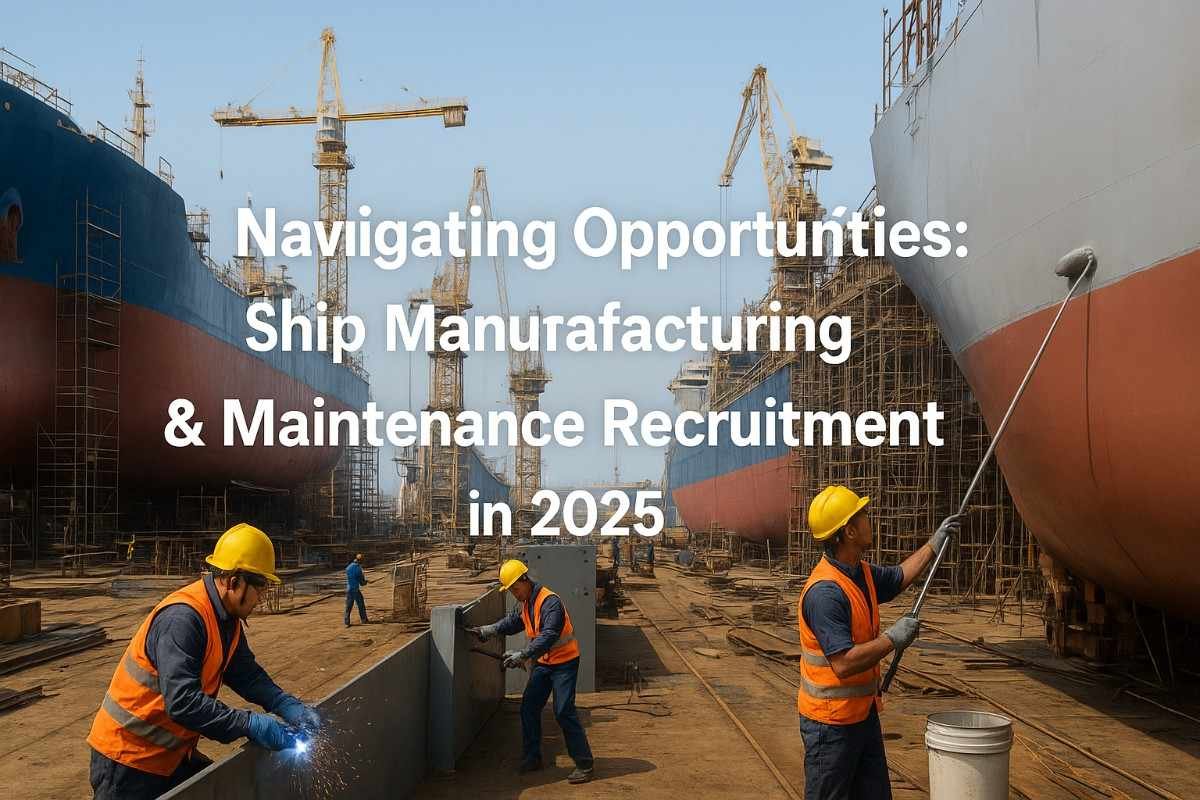
Introduction – Why Shipbuilding and Maintenance Careers Are Anchoring Big in 2025
The global maritime industry is riding strong currents in 2025, with ship manufacturing and maintenance emerging as one of the most promising employment sectors. With the rise in international trade, coastal tourism, offshore energy projects, and naval defense modernization, the demand for skilled professionals in shipyards and maintenance docks is surging. These roles aren’t just for engineers—they open doors for welders, electricians, mechanics, painters, fitters, quality inspectors, and even logistics coordinators. Modern ship manufacturing blends heavy industry expertise with cutting-edge technology like automation, advanced composites, and eco-friendly propulsion systems. At the same time, ship maintenance is critical to keep vessels seaworthy, efficient, and compliant with global safety regulations. Whether you’re a newcomer eager to learn a skilled trade or an experienced worker looking for stable, well-paid employment, the maritime sector in 2025 offers a sea of opportunities waiting to be explored.
1. Understanding Ship Manufacturing & Maintenance
Ship manufacturing is the process of designing, assembling, and launching different types of vessels—cargo ships, tankers, passenger ferries, fishing boats, naval warships, and more. It involves multiple specialized departments, each working together to ensure the vessel is strong, efficient, and safe.
Ship maintenance, on the other hand, focuses on keeping existing vessels in peak condition. This includes structural repairs, machinery overhauls, repainting, corrosion prevention, and upgrading navigation systems. Maintenance ensures ships operate efficiently and comply with international maritime laws.
2. Types of Roles in Ship Manufacturing & Maintenance
The industry offers a wide range of jobs suitable for different skill levels:
- Ship Welders & Fabricators – Joining metal sections, frames, and hull components.
- Marine Electricians – Installing and repairing wiring, lighting, and control systems.
- Pipefitters – Assembling and maintaining fluid transfer systems onboard.
- Mechanical Fitters – Installing engines, propellers, pumps, and generators.
- Painters & Coating Specialists – Applying protective paints to prevent corrosion.
- Carpenters – Building and repairing wooden interiors or deck structures.
- Quality Control Inspectors – Ensuring manufacturing and repairs meet safety standards.
- Maintenance Technicians – Handling routine servicing and emergency repairs.
3. Skills That Make You Stand Out
While some roles require advanced technical training, many positions allow for on-the-job learning. Key skills that improve hiring chances include:
- Precision in measurements and assembly.
- Knowledge of tools, machinery, and safety protocols.
- Physical stamina and comfort working outdoors.
- Problem-solving skills, especially in urgent repair situations.
- Understanding of maritime safety standards.
- Team coordination in high-pressure environments.
4. Recruitment Trends in 2025
The 2025 job market for ship manufacturing and maintenance is shaped by a few key factors:
- Sustainability Shift – More ships are built with eco-friendly propulsion and materials, creating demand for workers skilled in green technologies.
- Automation Integration – CNC cutting, robotic welding, and digital design systems are common, requiring tech-savvy workers.
- Global Trade Expansion – Increased imports/exports mean more ships are needed and more maintenance jobs are created.
- Naval Defense Investment – Many countries are expanding their naval fleets, boosting demand for skilled labor.
5. How to Apply for These Jobs
- Attend recruitment drives hosted by shipyards or marine engineering companies.
- Register with industrial job placement agencies specializing in maritime sectors.
- Prepare a resume highlighting relevant mechanical, welding, electrical, or construction experience.
- Be ready for a short skills test—practical tasks like welding joints, reading blueprints, or assembling components.
- Show flexibility for shift work and willingness to work in dockyards or at sea.
6. Pay & Benefits Overview
Earnings vary based on role, experience, and location:
- Entry-Level Laborers – ₹15,000–₹20,000/month.
- Skilled Technicians – ₹25,000–₹40,000/month.
- Specialist Engineers – ₹50,000 and above.
Benefits often include overtime pay, travel allowances, free meals, safety gear, and accommodation near shipyards. Some companies also offer training programs for career progression.
7. Work Environment & Safety
Shipyards are bustling with activity—giant cranes lifting components, welding arcs flashing, and large teams working in sync. Safety is a top priority: workers wear helmets, gloves, safety glasses, and protective boots. Strict rules cover lifting, working at heights, and operating heavy machinery.
Maintenance work can take place in dry docks, at ports, or even onboard ships at sea. Weather conditions, tide schedules, and project deadlines can make the job physically demanding but also exciting for those who enjoy dynamic environments.
8. Career Growth Opportunities
A ship manufacturing or maintenance role in 2025 is not just a job—it’s a career ladder. You can start as a helper or trainee and grow into positions such as:
- Lead Welder/Fabrication Supervisor
- Marine Electrical Supervisor
- Quality Control Manager
- Dockyard Operations Manager
- Project Engineer
With continuous skill upgrades, some workers even transition into ship design or maritime safety inspection careers.
9. Challenges in the Job
- Physical Strain – Heavy lifting, long hours, and outdoor work.
- Tight Deadlines – Shipping schedules often require fast turnarounds.
- Weather Exposure – Rain, heat, or cold may affect outdoor work.
- High Responsibility – Mistakes can impact safety and performance at sea.
Despite these challenges, many find the work rewarding because they contribute to global transportation and defense systems.
10. Why This Industry Is Worth Joining in 2025
- Stable Employment – Ships are essential for trade and defense, ensuring constant demand.
- Skill Development – Learn specialized, in-demand skills.
- High Growth Potential – Opportunities to climb into supervisory or technical expert roles.
- Global Opportunities – Skilled workers may find jobs abroad in major shipyards.
Conclusion
Ship manufacturing and maintenance in 2025 offers one of the most secure and skill-driven career paths in the industrial sector. Whether you’re building massive ocean liners or repairing fishing vessels, your work plays a vital role in keeping global commerce and transport afloat. The combination of hands-on craftsmanship, cutting-edge technology, and clear career progression makes this field attractive for both fresh entrants and experienced professionals. If you’re ready to work hard, adapt to new technologies, and take pride in creating something that sails across the world’s oceans, the shipbuilding and maintenance industry could be your ideal port of call for a prosperous future.
